Meadowbrook hall back hall
Rochester, MI
Original Construction
1929 Completion Date
2012
Size
1,905 sqft
National Historic Landmark
Meadow Brook Hall was built during the country place era, a time when wealthy American industrialists pursued rural life in settings of great beauty. It represents one of the finest examples of Tudor-revival architecture in America and is especially renowned for its superb craftsmanship, architectural detailing and grand scale of 88,000 square feet. Inspired by the country manor homes in England, it was designed and built by the Detroit architectural firm of Smith, Hinchman and Grylls between 1926 and 1929, at a cost of nearly $4 million.
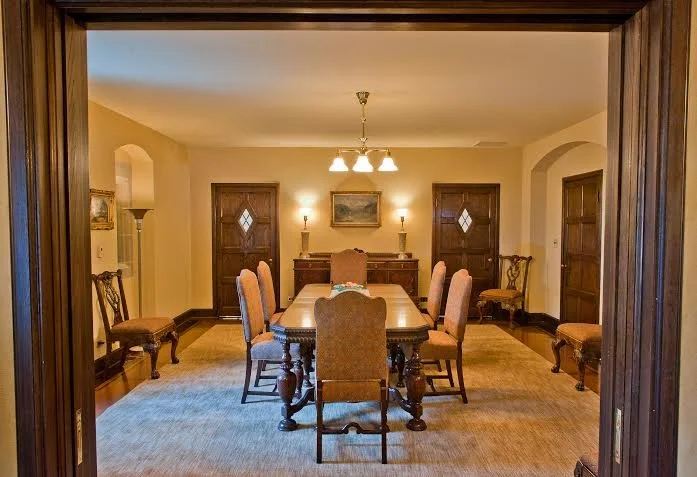
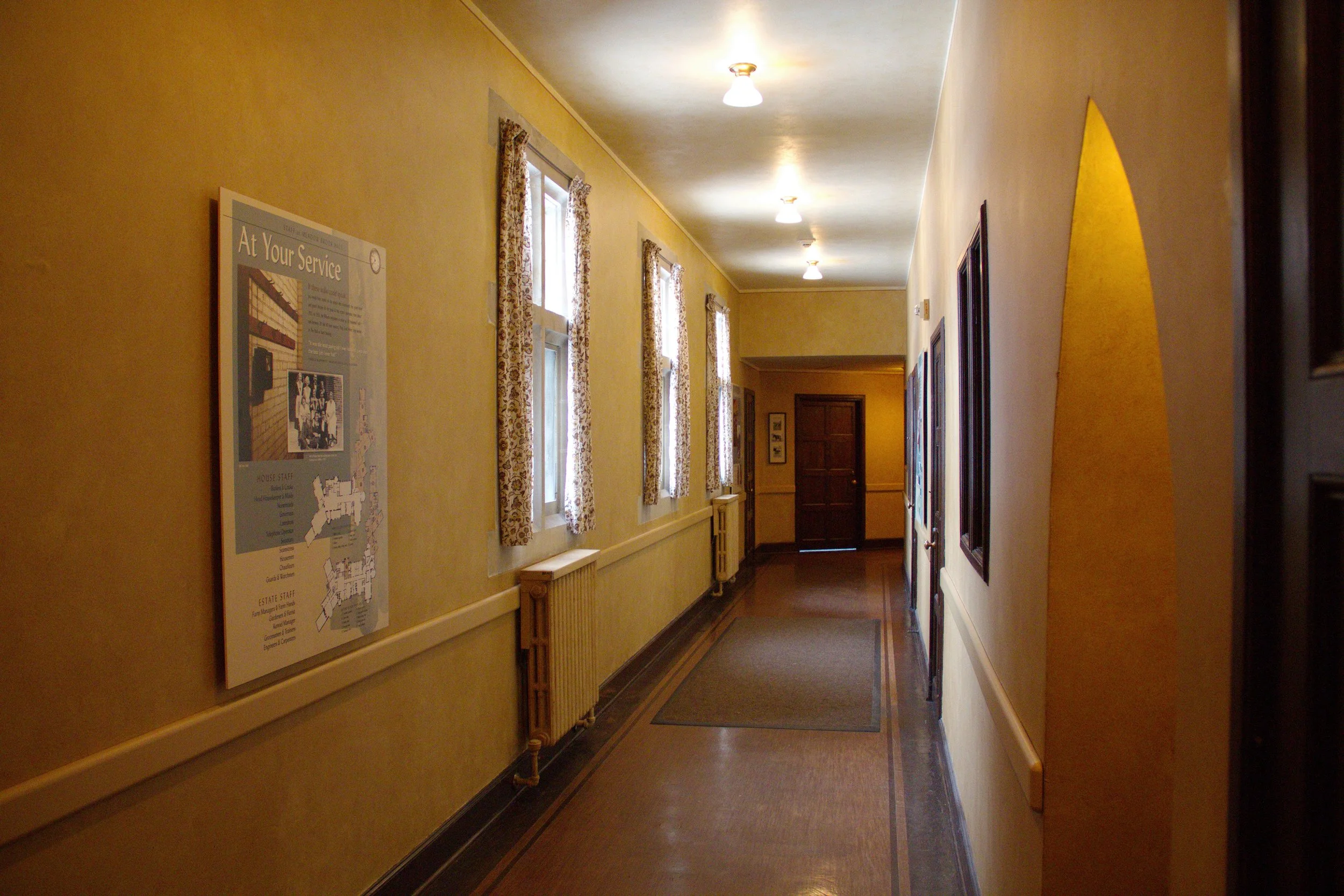
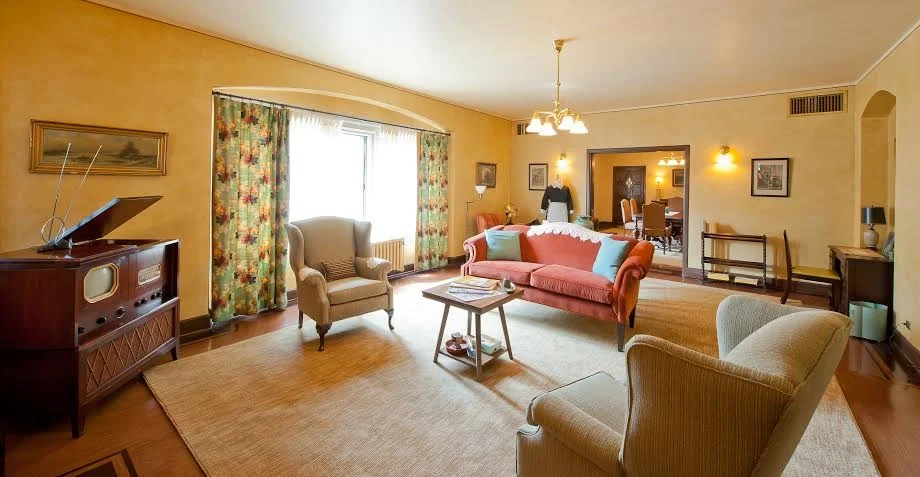
HopkinsBurns Design Studio was commissioned to restore the original service (servants) areas. Extensive research was conducted to identify room layouts, function, original materials and finishes. Project scope included:
• Restoration of the original linoleum floor, dividing wall with pocket doors to match original, metal windows and leading; buckled, torn, delaminated, canvas fabric on walls; light fixtures, updated electrical, and mechanical systems; plaster walls, coves and ceilings; and woodwork and decorative doors
• Reinstallation of historic decorative textured, “scumble” glaze which matched original finish to add the impression of age
• Installation of period window coverings, original furniture and replicas
The outcome is a holistic restoration of the servant’s back of house area that fully depicts the work environment of the support staff that was required to run a house of this magnitude.
Meadow Brook Hall was built between 1926 and 1929 by the Detroit architectural firm Smith, Hinchman and Grylls. This was a time when wealthy industrialists established grand rural estates, and Meadow Brook Hall at 88,000 square feet and a cost of nearly $4 million,
HopkinsBurns Design Studio was commissioned to restore the original servants' back-of-house areas to depict the working environment of the estate's historic support staff. Following research into room layouts, functions, materials, and finishes, the firm restored original linoleum flooring, pocket doors, metal windows, leaded glass, plaster surfaces, woodwork, decorative doors, and damaged canvas wall coverings. The scope also involved updating electrical and mechanical systems, reinstalling period-appropriate light fixtures and window treatments, reintroducing original and replica furniture, and reapplying a historic "scumble" glaze to replicate the finish of the era