
Greenmead Historical park
Livonia, MI
Original Construction
1820-40’s
Completion Date
1987 (House); 1992 (Barn)
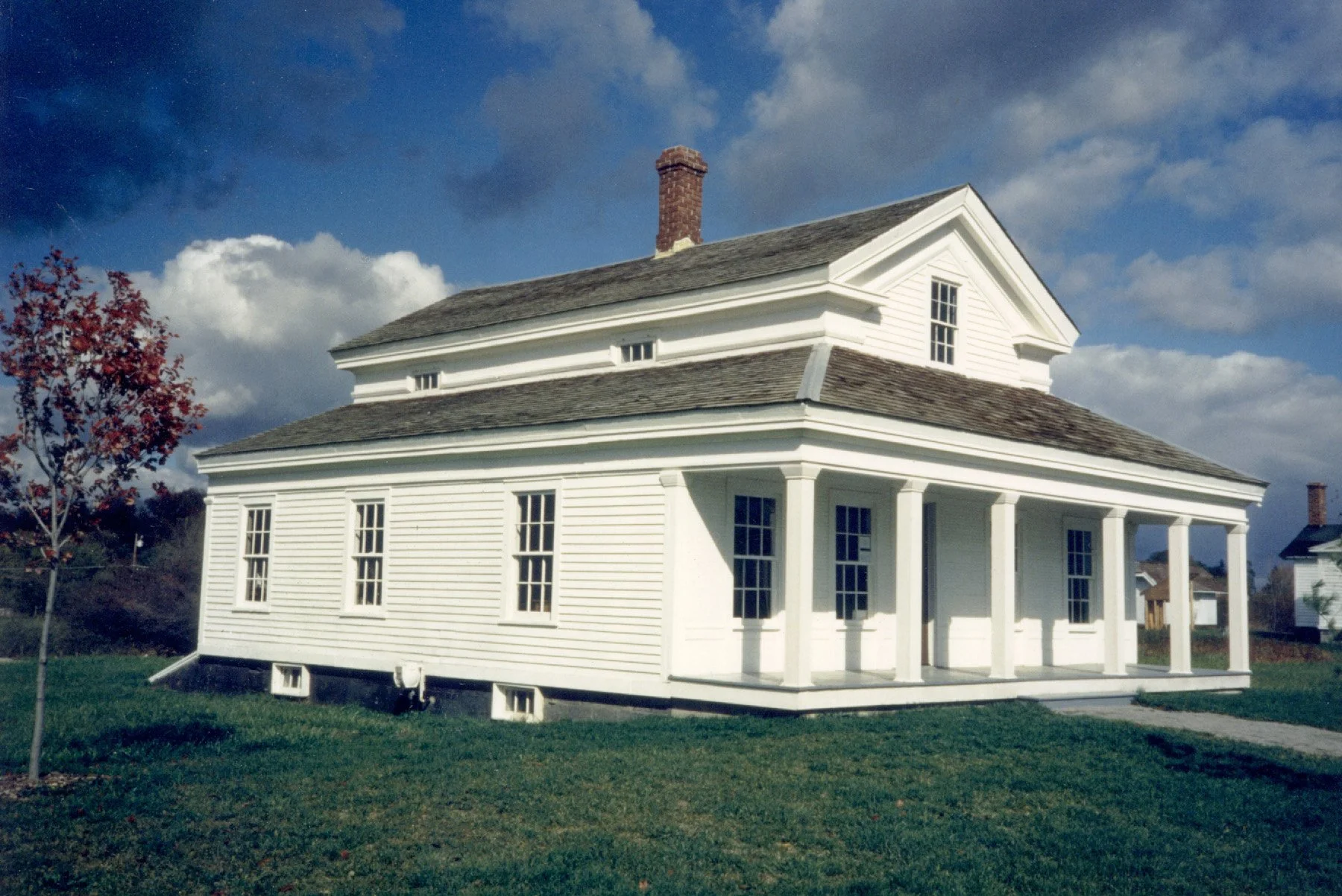
Greenmead Historical Park, acquired by the City of Livonia in 1976, preserves an important part of Michigan’s agricultural and architectural heritage across its 95-acre site. Originally the homestead of Michigan pioneer Joshua Simmons, the property includes an 1841 Greek Revival farmhouse, historic agricultural outbuildings, recreational areas, and a Historical Village featuring relocated structures that might otherwise have been lost to development. The farm complex is listed on the National Register of Historic Places and retains nine of its eleven original outbuildings, including the North Barn, constructed in 1829 as the first barn in Livonia Township. Together, the historic farmstead and village illustrate the evolution of rural life and community development in Michigan, while continuing to serve as a cultural and recreational destination supported largely by volunteers and local contributions.
Architects Four, the parent company of HopkinsBurns, participated in a three-phase restoration project involving eight structures within Greenmead Historical Park’s Historical Village. The project encompassed Hill House, Hinbern/Cranshaw, Bungalow, Quaker Meeting House, Blue Office, Blue House, Church, and the Greek Revival House. For each building, the firm assessed existing conditions, analyzed preservation needs, and prepared an inventory of recommended restoration work to establish the scope of improvements. Following this assessment, the firm developed construction drawings to guide the restoration of each structure. Implementation was coordinated with the availability of funding and relied substantially on volunteer labor, with portions of the work deferred until resources became available. Through this phased approach, the firm helped establish a framework for preserving the village’s historic buildings and supporting the park’s ongoing cultural and educational mission.