
GORDON HALL
Location
Dexter, MI
Original Construction
1843
Construction Cost
$125,000
Size
9,430 sqft
Completion Date
Ongoing
National and State Register Listed
Local Historic District
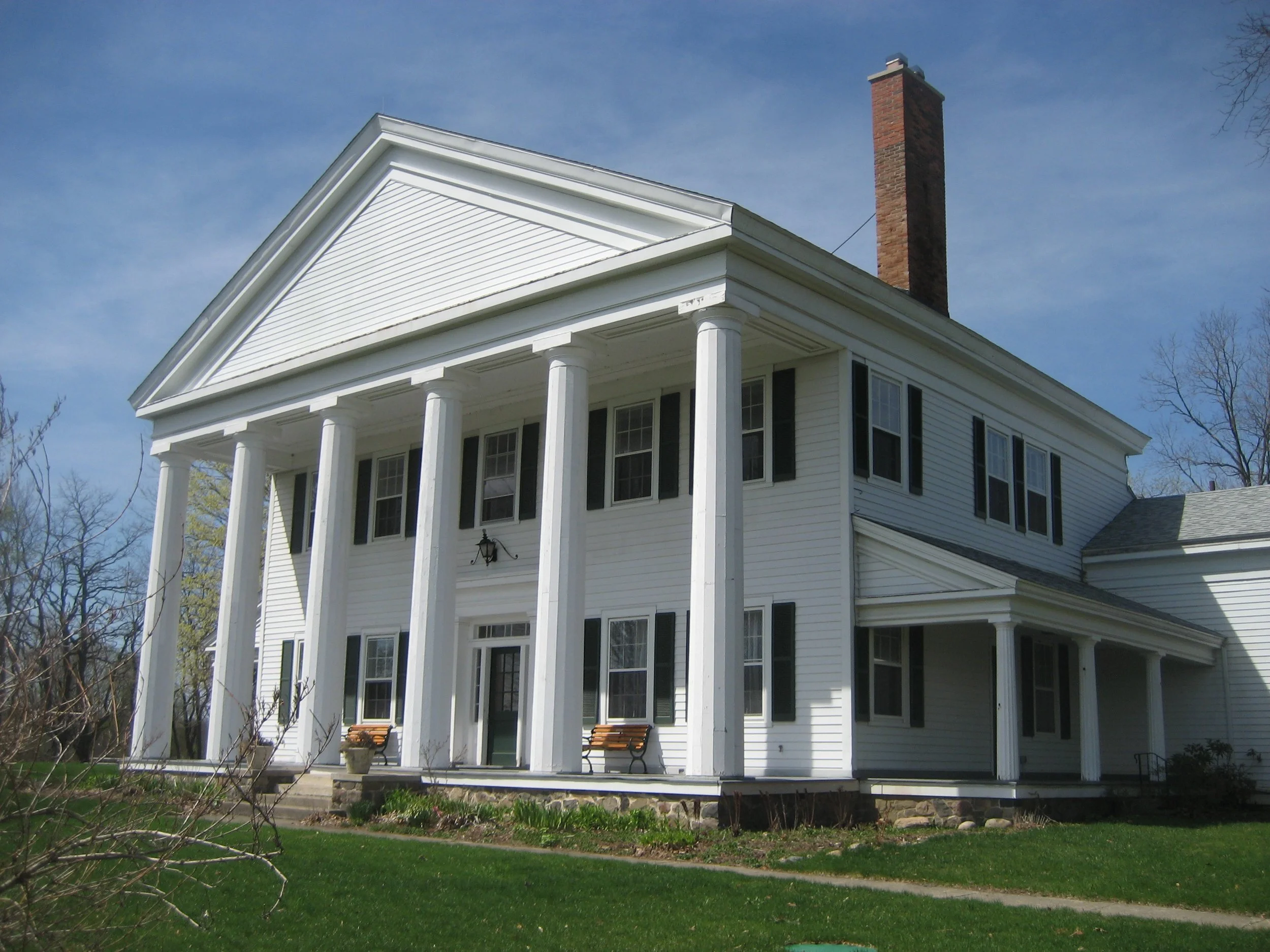
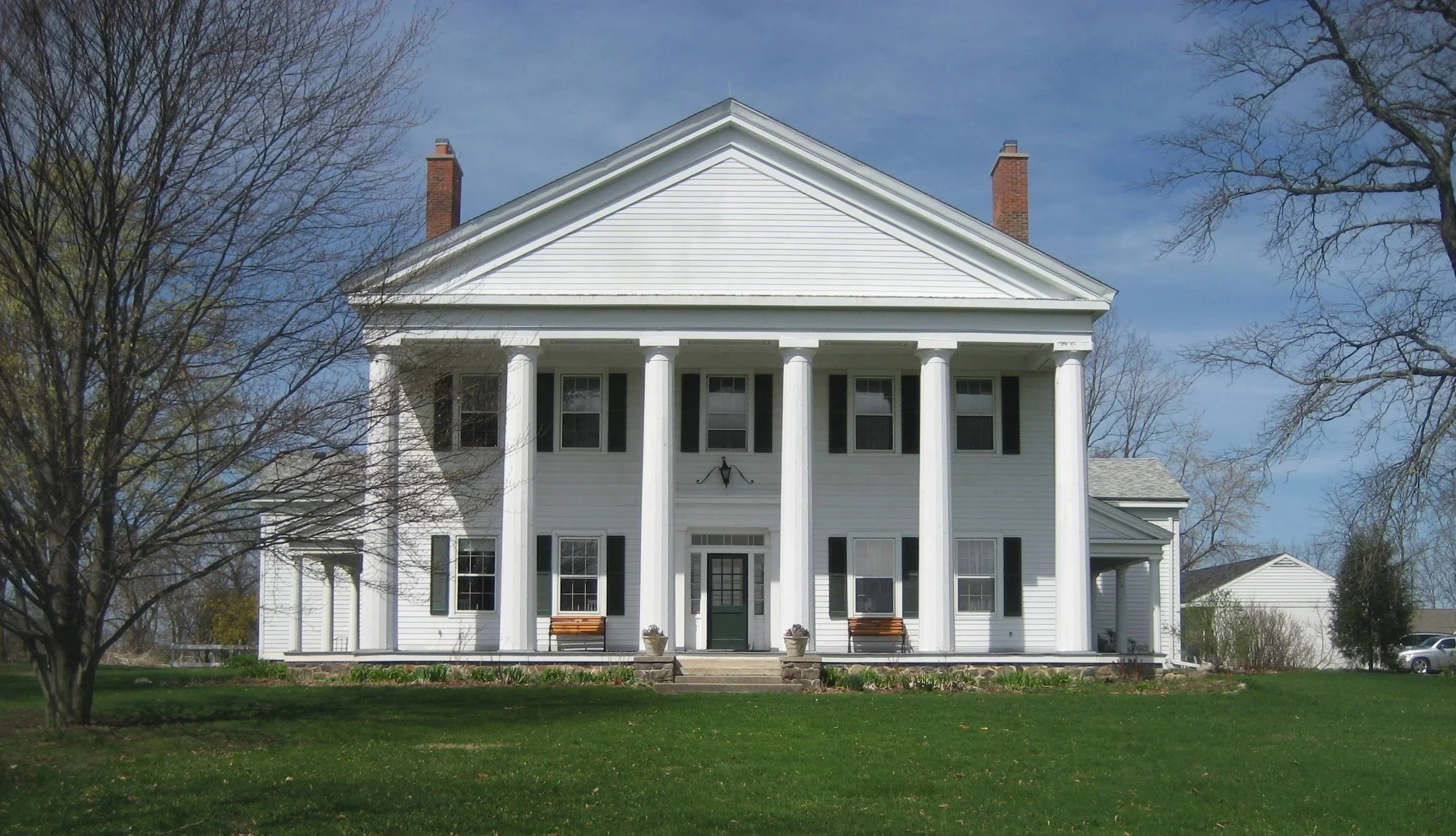
Gordon Hall, owned by the Dexter Area Historical Society (DAHS), is a striking example of Greek Revival architecture, on a sweeping 68 acre piece of land just west of downtown Dexter, Michigan. Judge Samuel W. Dexter, founder of the Village of Dexter, built the house in 1843. In 1951 the house was donated to the University of Michigan. Unfortunately, the University significantly modified the interior, gutting and converting it to apartments, removing almost all of its interior historic character. Thankfully, the original exterior features that gave the house its majestic presence were retained. In 2006, DAHS purchased the house with the intent of making it a community resource and an extension of its museum activities.
In 2011, DAHS commissioned HopkinsBurns Design Studio to produce a Rehabilitation Master Plan to guide and support its future restoration and fundraising efforts. The Master Plan Team also worked with DAHS to determine programming for the facility based on the organization’s vision that Gordon Hall should be a resource to the community and developed a plan for implementation that would lead to the restoration of the interior and exterior; permit the building to be available to the community; generate revenue; and provide space for the museum’s historical exhibits, outreach programs, and educational efforts.
HopkinsBurns was selected in 2015 to implement the Exterior Restoration Phase of the Master Plan through a Michigan Heritage Restoration Program Grant. Work included selective removal of non-original construction, restoration and repair of original wood siding and trim, as well as reconstruction of the original West Porch roof.
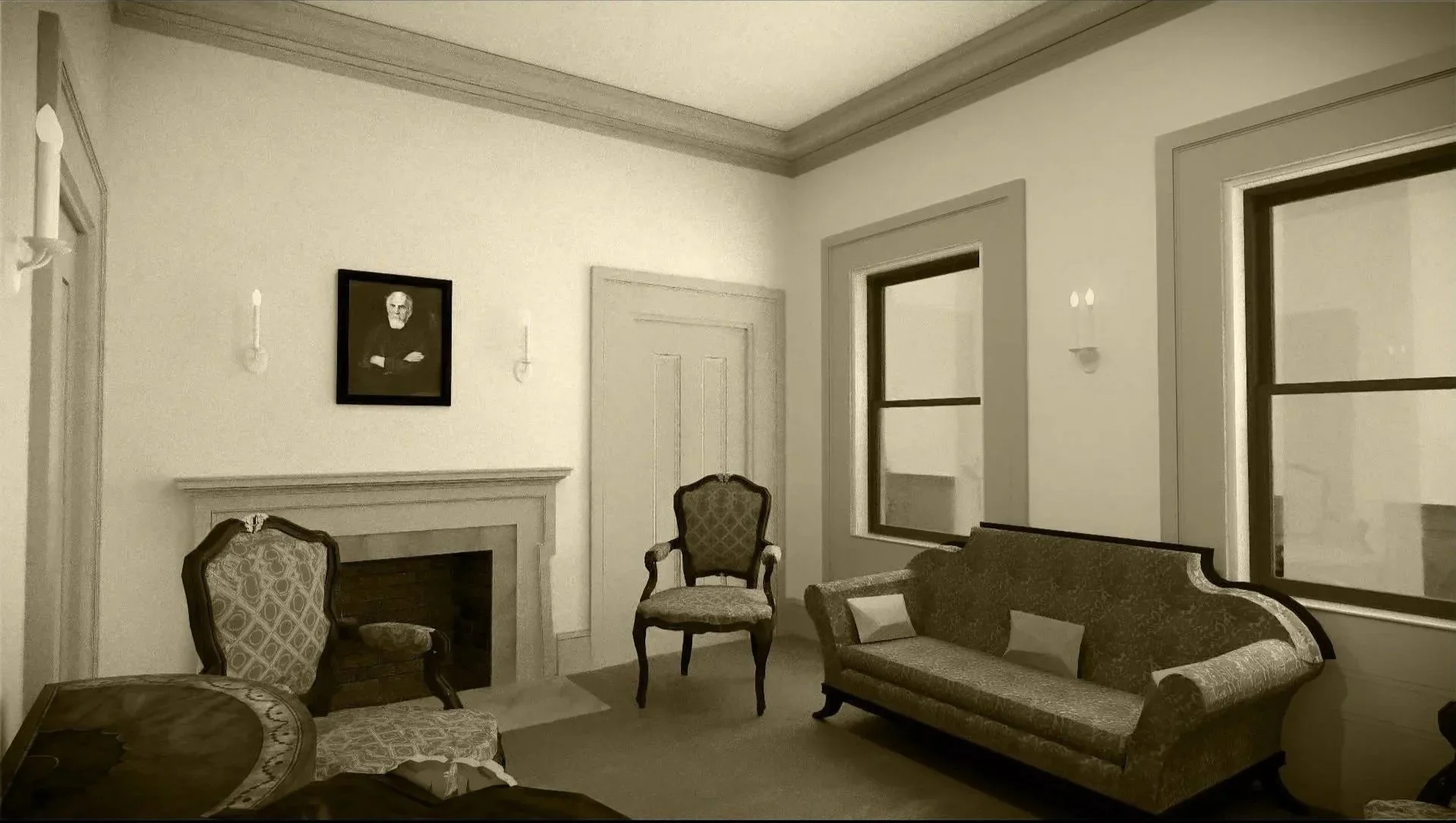
In 2018, HopkinsBurns was selected to lead the project team and provide design and construction document services for the Interior Rehabilitation Phase of the Master Plan through a Certified Local Government Grant. Through implementation of the drawings and specifications developed, accessible history will be created. The harmonious blend of historically-accurate reconstructed character-defining features and spaces with those reinterpreted for modern needs and functions will provide the public with unique educational and cultural experiences.