
FORT MACKINAC, MACKINAC STATE HISTORIC PARKS
Mackinac Island, MI
Original Construction
1780’s
Completion Date
2001
National Historic Landmark
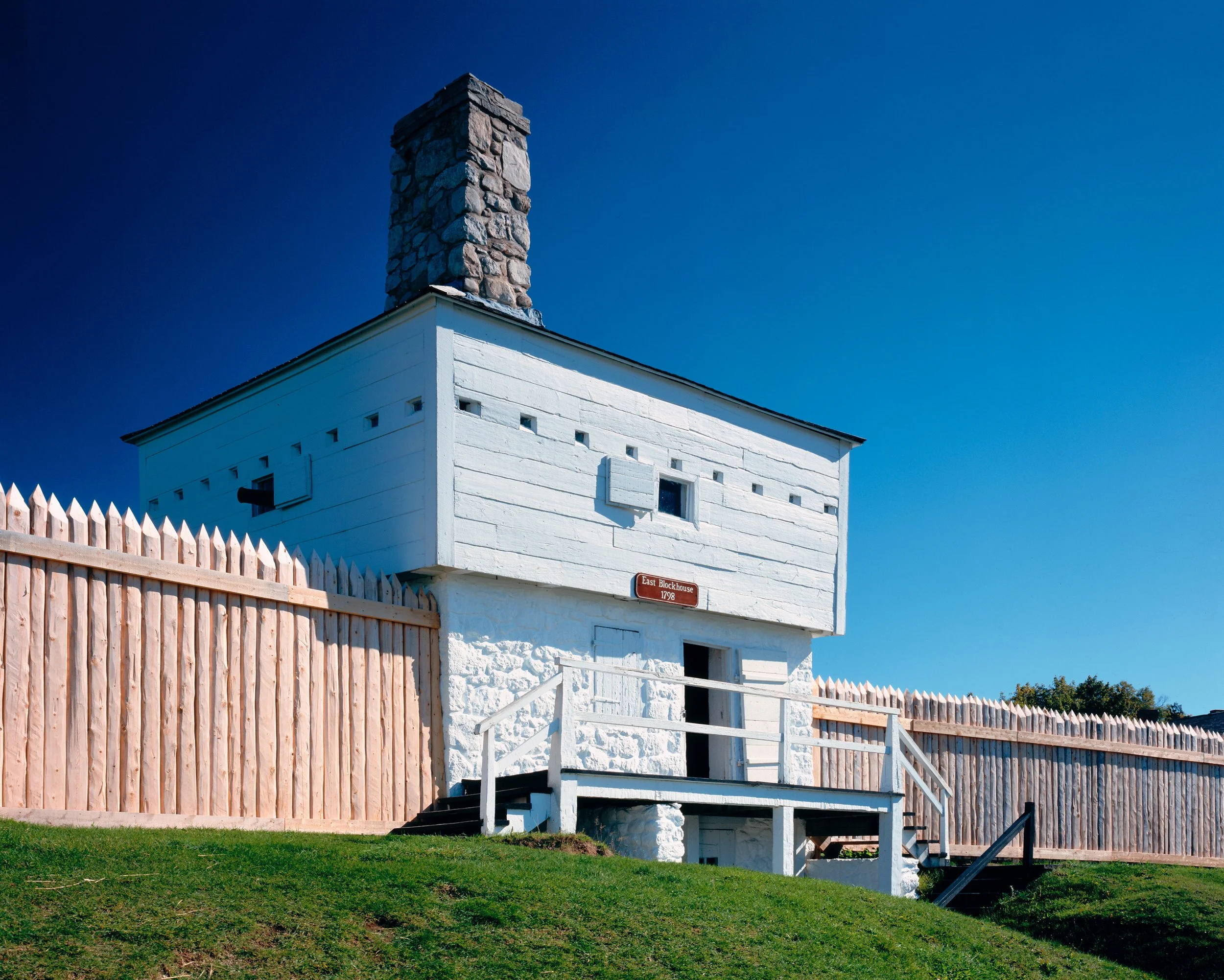
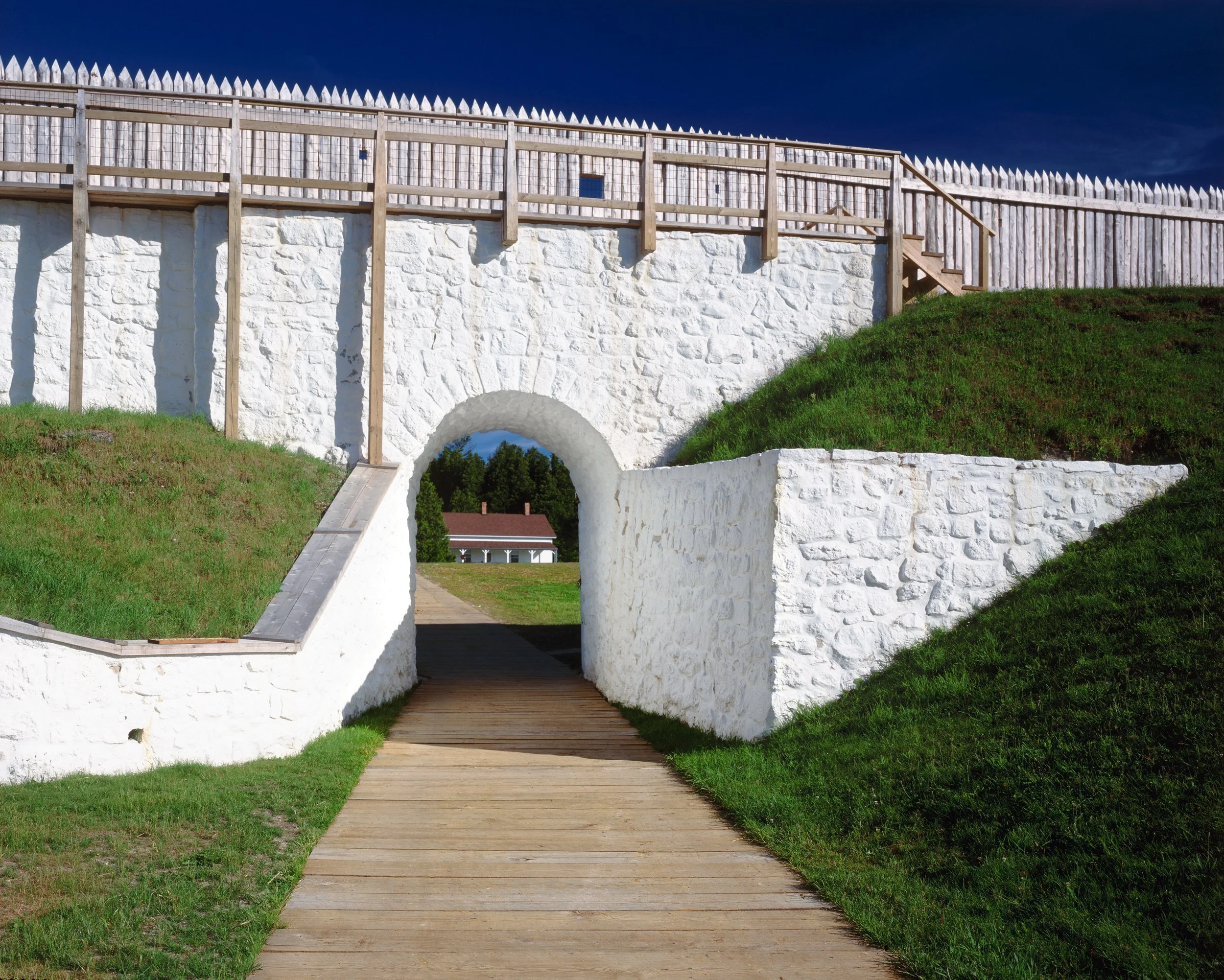
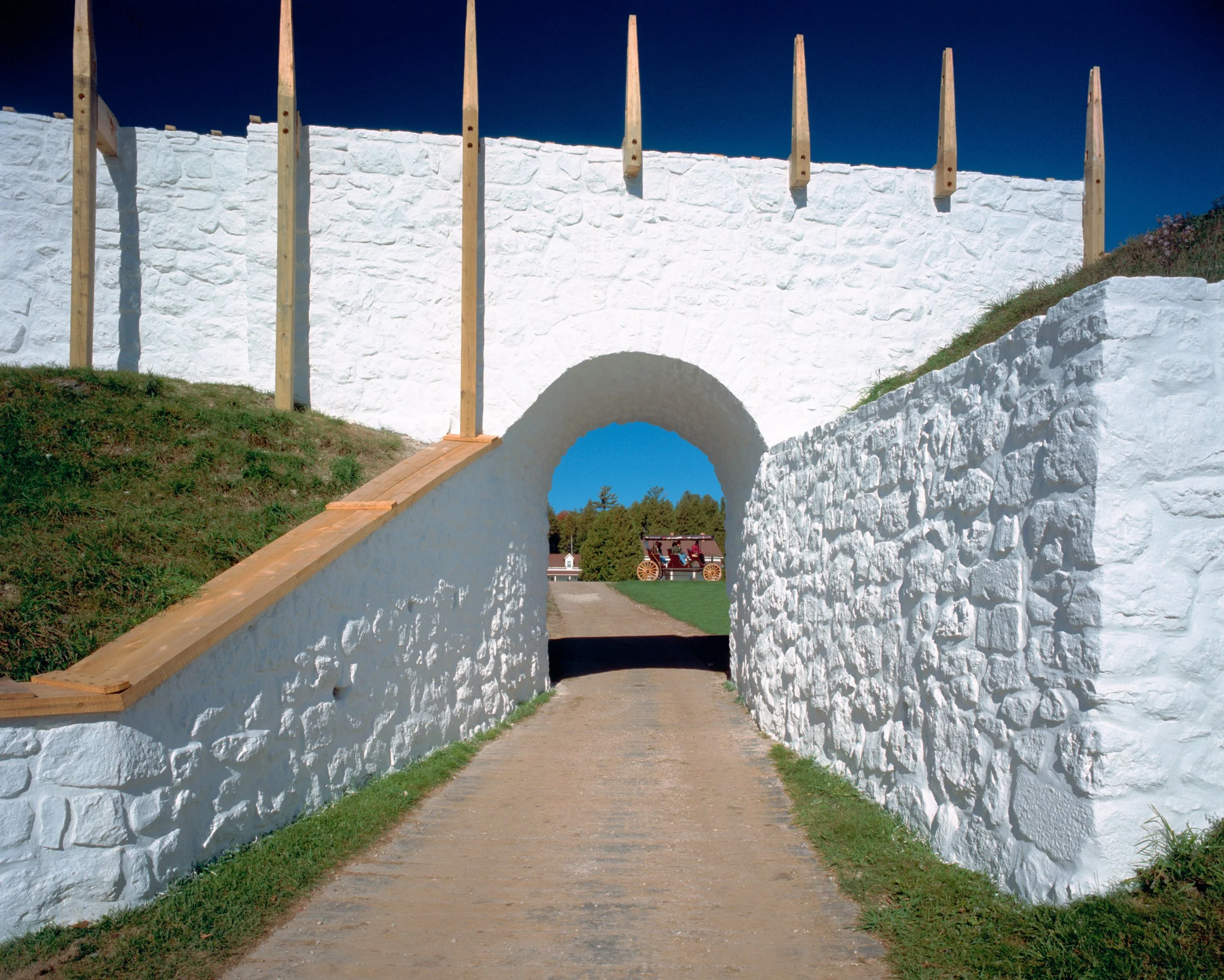
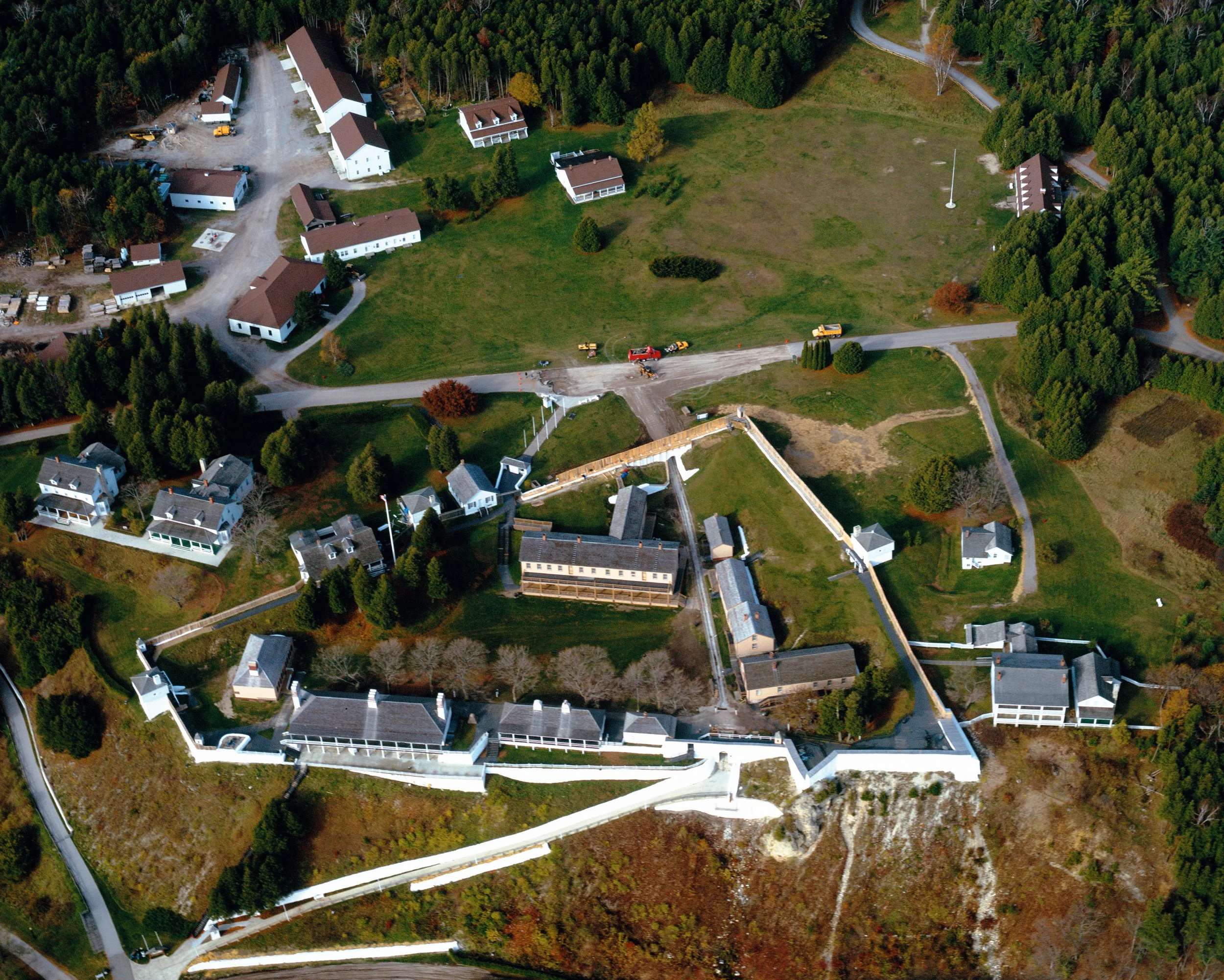
Originally planned by the British to defend its strategic interests, the fort changed hands three times during the War of 1812 before the United States gained final control in 1814. In 1875, the fort and much of the island were designated as the United States’ second National Park. In 1895, the fort was transferred to the State of Michigan, and restoration efforts have been ongoing since 1958 to restore the National Historic Landmark to its pre-1895 U.S. military period appearance. The fort's dominant feature is its massive perimeter wall system—constructed of local limestone reaching several hundred feet long, up to 8 feet thick, and 30 feet high.
HopkinsBurns Design Studio played a pivotal role in preserving the fort, led by principal-in-charge Eugene C. Hopkins, FAIA, and project architect Greg Jones, AIA. The team surveyed the aging limestone walls to produce construction documents for restoration, carrying out everything from delicate repairs to full wall reconstructions complete with new foundation footings and caps. HopkinsBurns balanced traditional masonry techniques with concealed modern preservation strategies to preserve the walls, such as slope-based water migration controls to mitigate the damaging hydrostatic pressure. Work also included restoration of the stockade walls, block houses, and civil engineering for original parade grounds. The firm successfully coordinated these complex structural interventions alongside archaeological efforts—all while keeping the active landmark open to visitors.